
The system of decision
The AI system of decision for your sales floor.
Strategy set by humans, enforced by AI agents, on every deal.
Strategy set by humans, enforced by AI agents, on every deal.
Steero organises messy deal inputs around a model of your business, then applies top-rep reasoning to every deal, in real time.




Turns every deal into connected data. Without this map, AI is just guessing.
Four rule types capture how your best reps sell, each checked against real won and lost deals.
This is the difference. Generic AI works from raw data and guesses. Steero works from a model of your business, and only recommends moves that lift margin without hurting win rate.
Set your pricing rules, product-configuration logic, and win playbooks in one place, then define the limits Steero holds the whole team to.
 Strategy Hub
Fleet · EMEA
Strategy Hub
Fleet · EMEA
Across all six phases of the deal, the agent recommends the right configuration, the data-backed price, and the next move, with the reason behind every one.
Every closed deal feeds back and sharpens the rules. Accept, override or ignore: each outcome tunes the guidance for the next similar deal.
You are the author. The field is your analyst.
Steero connects to CRM, CPQ, ERP, Outlook and Drive, reading deal context in and pushing guidance back out across your full sales tech stack. No ERP change, nothing to rip out and replace.
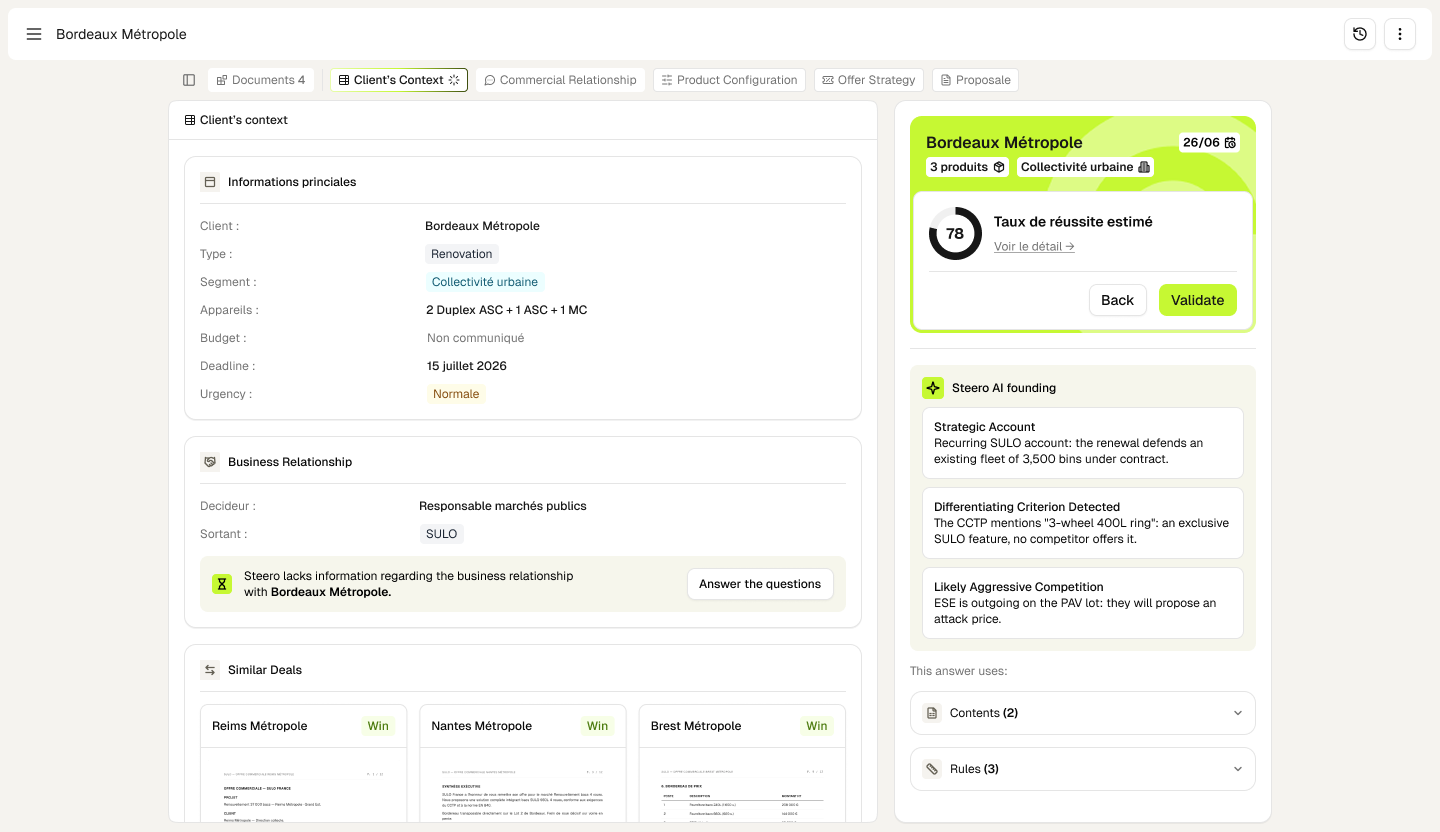
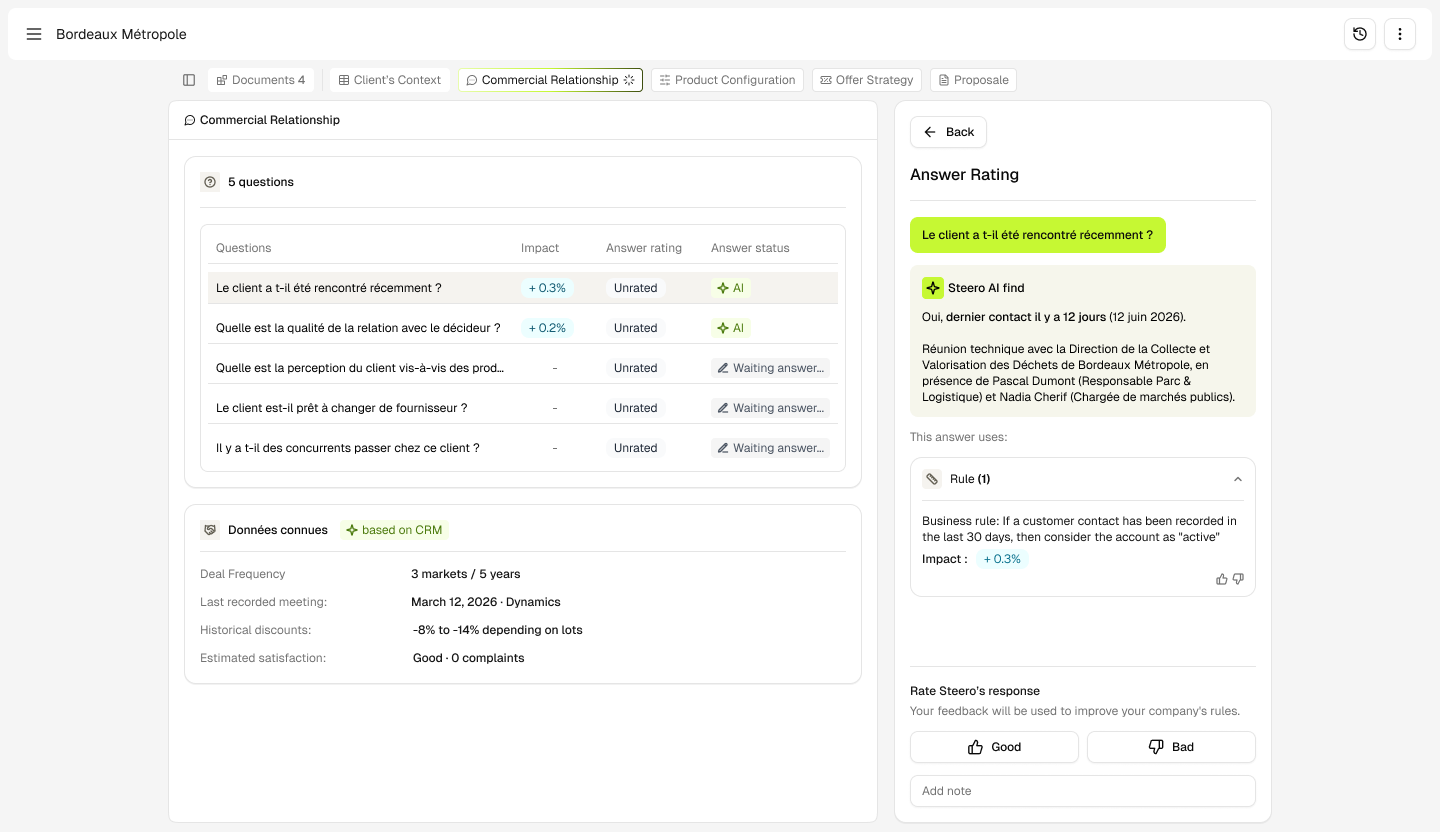
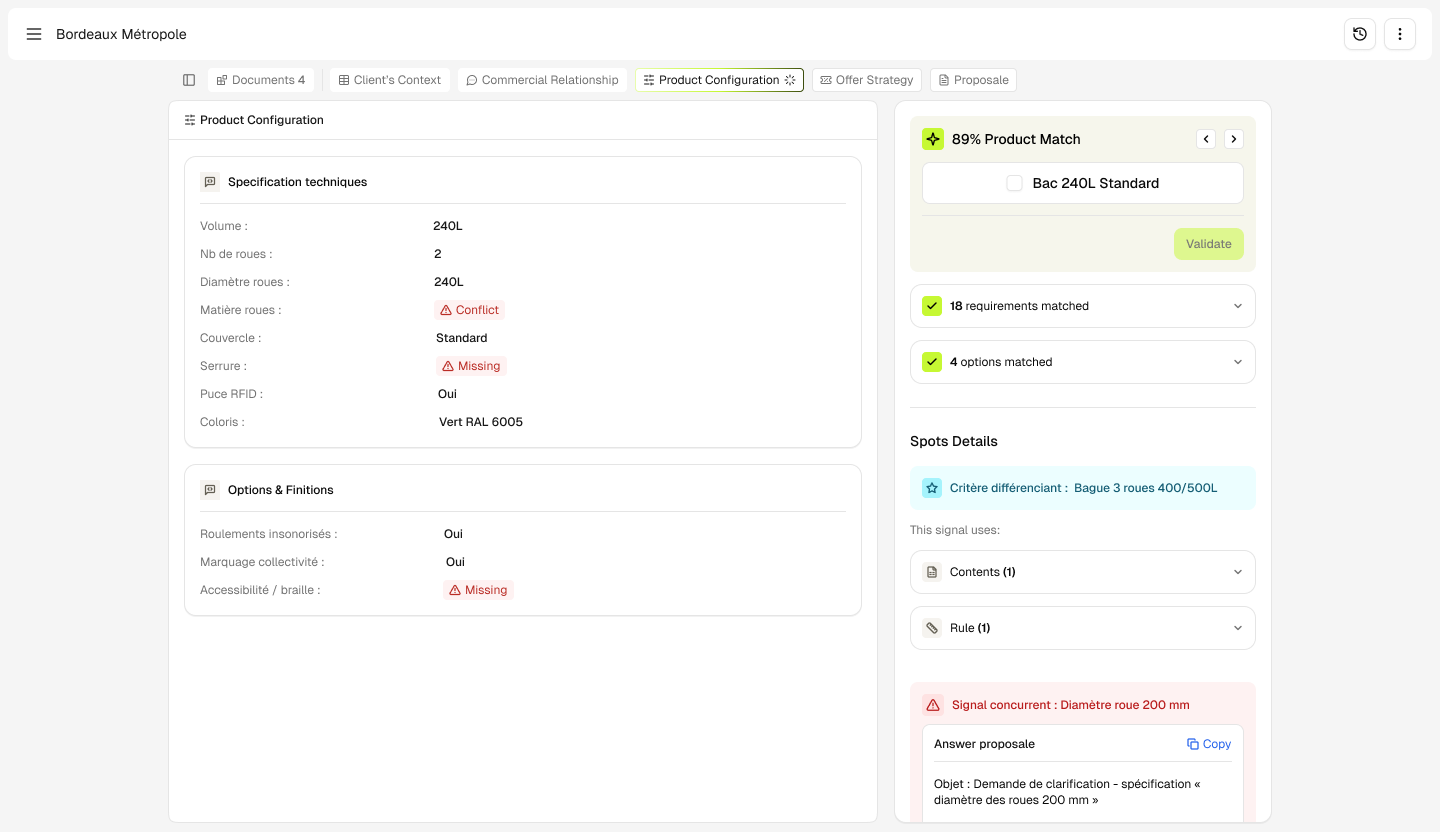
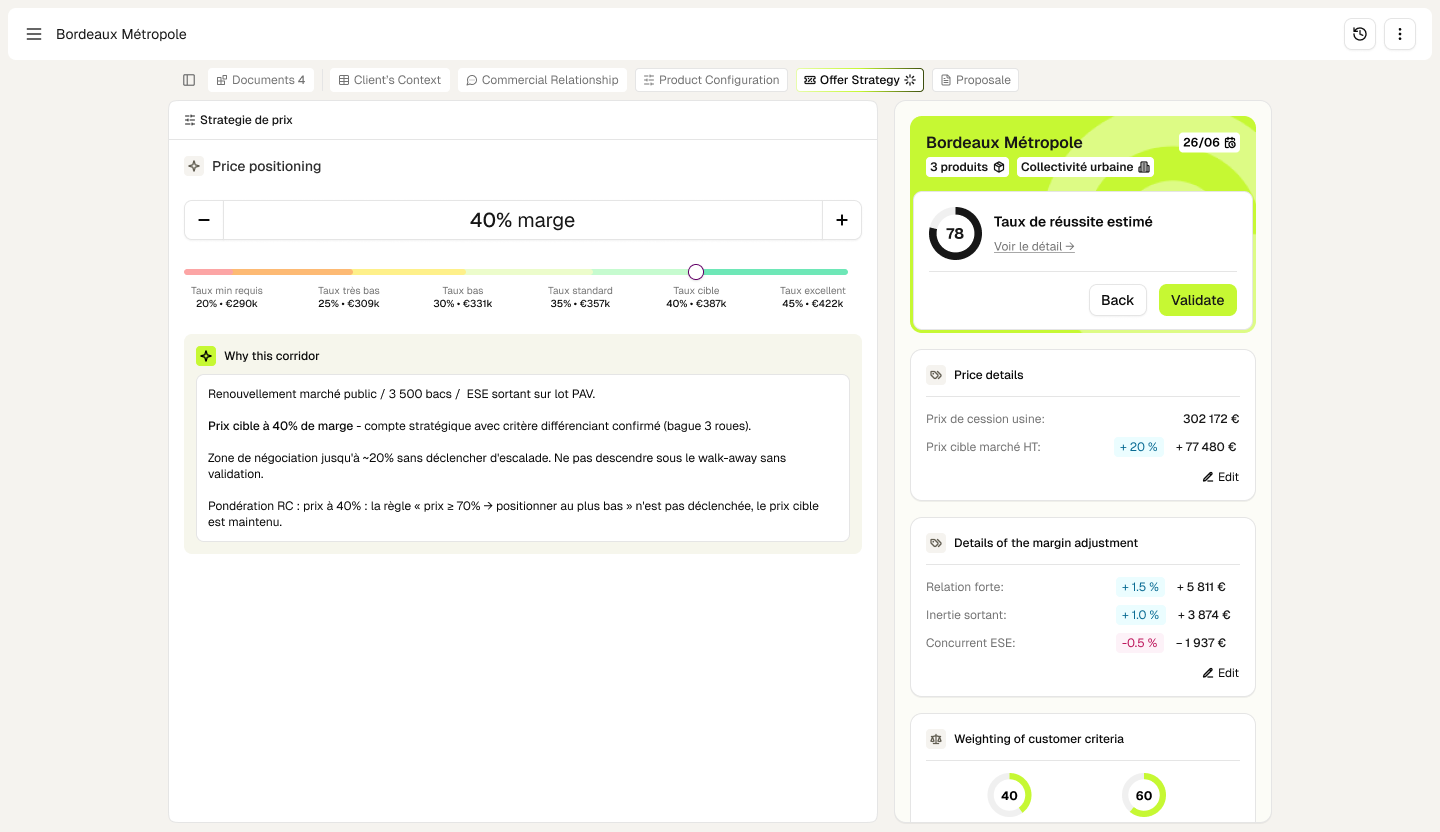

Our reference roll-out went from kickoff to live in about 4 weeks, on top of the client’s existing CRM and CPQ. No parallel system to build, no new dataset to create: Steero plugs into the pricing and deal history you already have. Reps are typically at full adoption within 20 days of go-live.
No. Steero connects to your CRM and CPQ (Salesforce, SAP CPQ, Tacton, Camos, or even a structured Excel configurator) rather than replacing them or pulling your deal data out to a separate system. It sits in the workflow your reps already use.
The margin that leaks silently in the 30 seconds before a rep commits to a number: not a pricing-strategy problem, an execution one. Same product, same territory, same corridor, and reps still land ±5 margin points apart with no one able to explain why until finance closes the quarter. That’s what Steero targets: +2 to 4 margin points per deal on average.
Access to your CRM/CPQ, a pricing corridor or playbook (even an informal one), and a sponsor who owns the margin gap on their P&L. That’s it. Steero builds its first recommendations from deal history you already have, not from a new data project.
No. Your CRM still tells you where deals are, your CPQ still enforces pricing rules: Steero is the layer neither of them has, the one that guides how a rep actually reasons, prices and negotiates in the room. It’s built to sit on top of what you run today, including pricing platforms like Zilliant, Vendavo or PROS.
Industrial manufacturers selling configured, technically complex products through their own direct sales force: usually 50+ reps in a territory, €500M+ revenue, and a team that’s already tried fixing margin variance with training, consulting or CPQ rules and watched it not stick.
We'll run it against your historical deals and show where margin is leaking, on your CRM and CPQ, with nothing to replace.